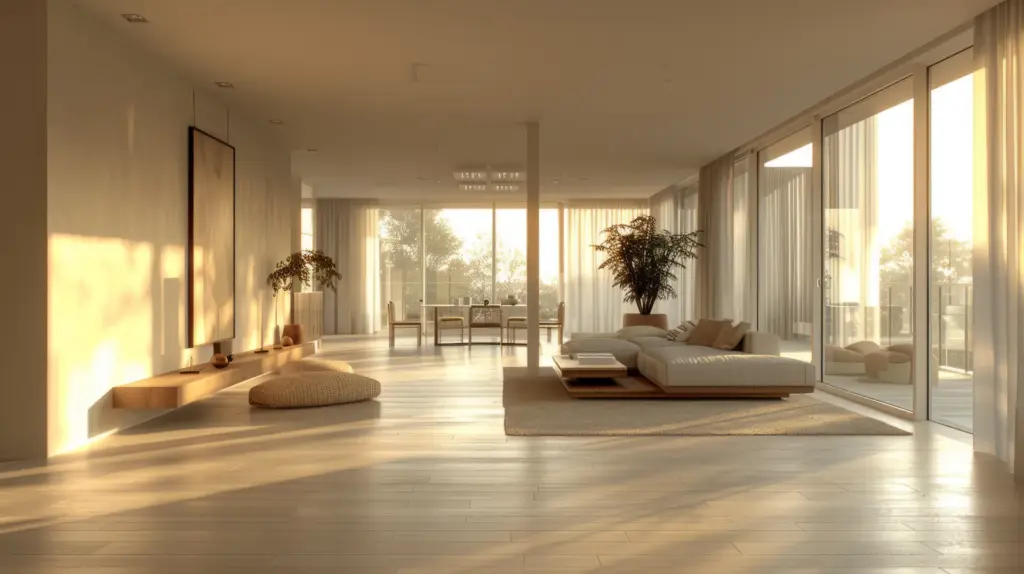


This blog looks at the real differences between a duplex penthouse and a standard penthouse: not just square footage, but layout, privacy, cost structure, and which option you should pick based on your needs. It also covers when the extra premium for a duplex is justified and when it isn’t. At the end, it looks at Mana Projects’ MANA Jardin Neo development in Bangalore, home to a genuinely rare duplex penthouse offering.
Table of Contents
- The Standard Penthouse: A Better Version of What You Already Know
- The Duplex Penthouse: A Different Way of Living, Not Just More Space
- What a Penthouse Premium Actually Buys You
- Where the Two Genuinely Diverge
- Who Should Buy Which, and When
- Mana Projects’ Approach to Penthouse Design
- MANA Jardin Neo’s Duplex Penthouses
- Practical Questions to Ask Before You Commit
- Conclusion
- Frequently Asked Questions
Buyers often treat “penthouse” as a single category, when in practice it covers two fairly different products sold at a similar premium. One gives you a larger, better-positioned version of an apartment you already understand. The other asks you to rethink how you use a home altogether. Confusing the two, or assuming that a higher premium always buys a better experience, is where many buyers make the wrong decision.
The Standard Penthouse: A Better Version of What You Already Know
A standard penthouse is on a single floor, almost always the top floor of the building, and its advantages come from where it is rather than how it’s built. You get a larger unit than what’s typical in the building, unobstructed views on more sides, and usually more private outdoor space than lower floors offer. Structurally, it’s still a conventional apartment: same floor-to-floor movement, same basic room relationships, just executed at a larger scale with fewer shared walls.
This matters more than it sounds. For a lot of buyers, it’s an upgrade that changes what you have, not how you live.
The Duplex Penthouse: A Different Way of Living, Not Just More Space
A duplex penthouse spans two internally connected floors, with a private staircase joining them. The meaningful shift isn’t the extra area; it’s that the home now has genuine vertical zoning. Private and social spaces can be separated by an entire floor rather than a hallway.
This layout also opens up design choices that a single floor can’t support: double-height living spaces, a staircase as an architectural feature rather than a utility, and outdoor decks that can be positioned differently on each level, capturing different light or views at different times of day.
It’s a whole different proposition, built around the idea that a home can have distinctly separated zones for how you actually spend a day, rather than one continuous floor plate.
Why Penthouses Cost More
The premium on a penthouse, standard or duplex, is rarely just about size. It’s a combination of position (fewer units above you, better light and ventilation), scarcity (there are only ever a handful per building), and, in well-designed developments, layout decisions that wouldn’t be economical to build for a typical floor. All three of these get priced into the unit, which is why penthouse premiums vary so widely between projects. A building with only one penthouse type is selling you position and scarcity. A building offering both standard and duplex penthouses is selling two distinct products, and the premium gap between them tells you how much the duplex layout itself is genuinely worth, beyond size and floor level.
What Sets the Two Apart
- Build and maintenance cost: Get the exact monthly maintenance figure in writing for both options before deciding, rather than assuming a duplex costs proportionally more because it’s larger. Ask specifically whether the duplex has a private lift, since this alone can meaningfully increase monthly charges beyond what the extra floor area would suggest.
- Scarcity and resale pool: Ask the developer or a local broker how many similar duplex units have sold, and at what pace, in the same micro-market over the last two to three years. A high premium justified by scarcity only holds up if there’s a real base of future buyers for that specific format when you’re ready to sell, not just a low unit count on paper.
- Furnishing and fit-out costs: A duplex generally needs more furniture, more curtains and window treatments, and often a second set of light fixtures and AC units to properly fill and condition two floors instead of one. Before comparing the sticker premium between a duplex and a standard penthouse, ask for the approximate additional area and get a rough fit-out estimate from an interior designer, since this cost is easy to underestimate until you’re actually furnishing the home.
What Type Of Penthouse Suits You Better
A standard penthouse tends to suit buyers who want more space and a better position in the building without changing their day-to-day routine. This includes seniors who would rather avoid stairs, smaller households who don’t need strict separation between social and private areas, and anyone buying primarily for long-term livability rather than statement value. It’s also generally the easier unit to resell, since the buyer pool for a well-located single-floor home is wider than that of a duplex.
A duplex penthouse is a larger household with private and shared spaces separated not just by a door but by an entire floor. Because there are no shared walls between rooms on different levels, bedrooms are well away from the noise and movement of daily life below, giving residents a level of quiet and privacy that a single-floor home simply can’t offer. This works well for buyers who entertain often and want guests on one level. It also suits anyone who wants a two-storey home within an apartment instead of a villa. It appeals to buyers thinking about the property as a long-term asset, since limited comparable supply and genuine scarcity tend to support strong value retention over time, provided the local market has enough buyers who want that format when it’s time to sell.
Mana Projects’ Approach to Penthouse Design
For Mana Projects, a penthouse isn’t just the largest unit on the top floor. It’s designed as its own category altogether. Layout, privacy, natural light, and the relationship between indoor and outdoor space are worked out at the architectural stage, not as an afterthought. Its duplex penthouse offerings are built as a genuinely different living format, not just a larger version of a standard unit.
MANA Jardin Neo is where this approach is most visible. It is an ultra-luxury development on Sarjapur Main Road, in the part of Bangalore known as the Golden Triangle, built for only 82 residences across 21 floors, with just two homes on each floor. That low density runs through the entire project, and it’s part of why MANA Jardin Neo is positioned as a rare, a one-of-a-kind address rather than a typical high-rise development. The same care that goes into its regular 3 and 4 BHK homes carries through to its duplex penthouse tier above them.
MANA Jardin Neo’s Duplex Penthouses
At the very top of MANA Jardin Neo is its most exclusive homes, the Limited Signature Penthouses.
Mana Projects offers rare duplex residences with expansive living spaces and private decks, built for a small number of residents with 270-degree panoramic views. With only a handful of these homes across the entire development, the Limited Signature Penthouses carry real scarcity value, the kind that support strong resale demand even for buyers who are looking for long-term value.
Practical Questions to Ask Before You Commit
A few things are worth confirming regardless of which type you’re leaning towards. Ask for the exact monthly maintenance figure rather than estimating it from size alone. Ask to see the floor plan for both levels of a duplex specifically, since the split between private and social space varies by project, and it directly affects how the home will actually function for your household. If resale matters to you, ask how many comparable units, standard or duplex, exist in the immediate market, since that shapes how easily you can sell later.
Conclusion
The real difference between a duplex penthouse and a standard penthouse isn’t primarily about size. It’s about whether you want a larger, better-positioned version of a home you already understand, or a genuinely different way of living that separates a home into distinct levels. Neither is objectively superior; the right choice depends on household size, daily habits, tolerance for stairs, and how you think about resale. MANA Jardin Neo‘s duplex penthouses are a good illustration of when that premium is genuinely justified: a small, rare tier of homes built for buyers who specifically want that different way of living, not simply a larger apartment.
Frequently Asked Questions
- What is the difference between a duplex and a penthouse?
A penthouse is a home at the top of the building. A duplex is a home spread across two connected floors with a private staircase or lift. The two mean different things: a standard penthouse is still a single-floor home, just positioned higher up and with more space, while a duplex penthouse combines both, a two-floor home that also sits at the top of the building. - Is a duplex penthouse a good investment?
Duplex units tend to hold their value well because they’re rare, and that same rarity works in your favour when you’re ready to sell. There’s often a dedicated pool of buyers looking specifically for that format. - Do duplex penthouses have higher maintenance costs than standard ones?
Usually, yes. The extra floor, additional outdoor space, and sometimes a private lift or staircase typically mean higher monthly charges than a comparable standard penthouse. - Is a standard penthouse right for me?
If you want more space and a better spot in the building without changing how you live day to day, a standard penthouse will be the right choice for you. It works well if you would rather avoid stairs, don’t need your social and private areas kept separate, or simply want a home that’s easy to live in for the long run. It’s also easier to resell, since more buyers look for a single-floor home than a duplex. - Which penthouse is better if I entertain guests often?
A duplex penthouse generally works better here, since it lets you keep guest areas separate from private floors, something a single-level home can’t fully replicate. - What’s the biggest mistake to avoid when buying a penthouse in Bangalore?
Paying the duplex premium mainly for the status of the layout, without honestly assessing whether you’ll use the second floor, tolerate the stairs, or find enough resale demand for that format later. - Is it better to buy a penthouse for personal use or as an investment?
Both can work well, but the right pick depends on your reason for buying. For personal use, choose based on how you live: a standard penthouse for space and views, a duplex for more privacy and separate living zones. For investment, focus on scarcity: check how many similar units already exist in the same micro-market before assuming the premium will hold its value.